Although at first glance social networks seem to be just some big wheels in the profit factory, many have proven to be a valuable source of information in these turbulent times, also showing concern for their users by taking certain (editorial) measures.
Ever since we’ve embraced social networks as part of our everyday lives, we are facing a question: Do they really connect us? Besides many advantages, they also pose a kind of a threat as they enable a rapid spread of fake news and sensationalism. The information we get on social media mostly skip editorial offices, which in traditional media represent a firewall against the spread of untrue and pompous content. In the digital world, the editorial role is left to the user himself, who – in stressful moments when quick action is needed – finds it difficult to take on such an important task. During the pandemic, social networks focused on this issue and tried to contribute to overcoming the corona crisis as easily and successfully as possible by taking various measures.

Facebook has set up a network to verify information
Facebook, which is still considered the king of social networks with over 2.5 billion monthly active users, is often described as a platform where content of dubious credibility is spread. During the pandemic, they announced the fight against misinformation and encouraged users to report suspicious posts and even set up a network in some countries for assessing the veracity of information with the assistance of external collaborators. They have also introduced a component into their algorithms that more often displays posts of credible sources such as the World Health Organization (WHO) and local health institutions.
Instagram enabled a group browsing of content
As a subsidiary network of Facebook, Instagram has also undergone algorithm updates. Here, too, posts by credible sources are shown more frequently; to further draw attention to the seriousness of the situation arisen, they have blocked content on Instagram showing coronavirus in a frivolous and entertaining light. In order to encourage as many users as possible to self-isolate themselves, they presented new ways of connecting through the social network and enabled users to browse content together using a video call.

Twitter focused on user credibility
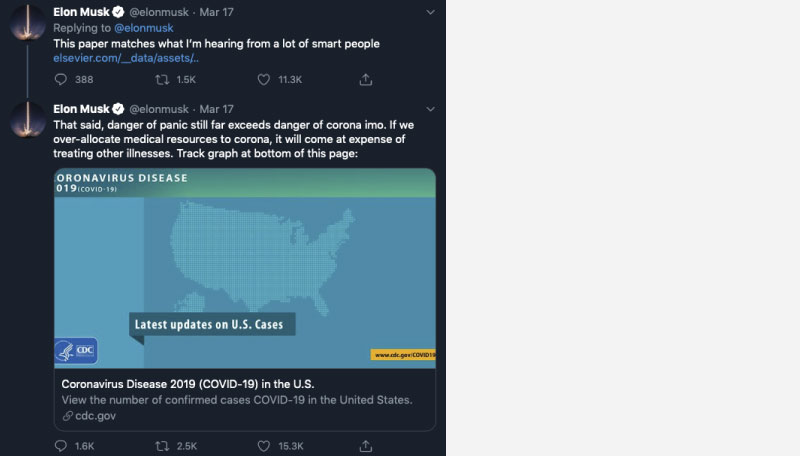
At Twitter, they justified their editorial role by removing all posts that could contribute to the spread of COVID-19 infections, while re-launching the authentication process of profiles marked with a distinctive blue tick next to the author’s name. Authentication was entrusted primarily to health professionals.
YouTube lowered the streaming quality
Due to the very nature of the platform, editing YouTube content is very challenging, yet they immediately began removing footage promising viewers they could cure COVID-19 on their own without the need for medical attention. Due to the large influx and consequently the extremely large amount of data streaming, they reduced the original quality of videos – this is no longer in full high definition (Full HD), but in standard high definition (HD). And they have also made a very important business decision that affects all advertisers as well as content creators, as all coronavirus-themed videos are played without ads.
LinkedIn focused on supporting work from home
As a social network we usually consider connected with the business world, it focused on providing information about online lectures, courses and effective work from home when the coronavirus broke out. LinkedIn has also given priority to verified and trusted sources of information.
What’s next?
The coronavirus pandemic is sure to leave its mark on social media as well. The presented editorial changes are currently, in most cases, related to the coronavirus, but we can certainly expect them to be transferred to other areas as well. Does this mean that we will no longer need to critically evaluate content on social media?